CLASS DESCRIPTION
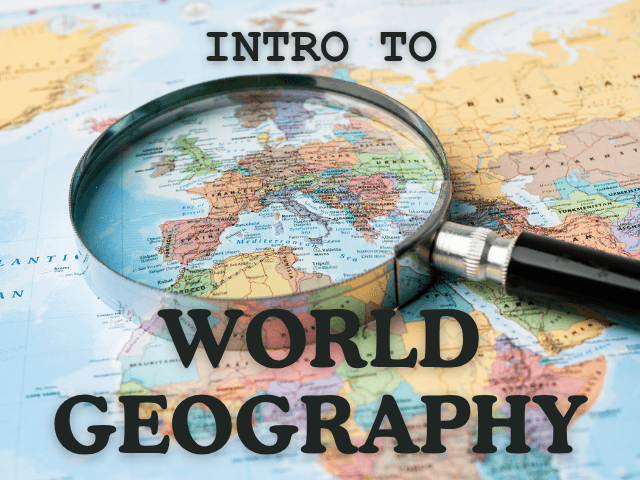
This six-week course provides students with a general overview of the geography of the different regions of the world. The focus of the course is on physical geography; but aspects of political geography, human geography, environmental geography, and more. Each week will take the student to a new region of the world where they will explore arid deserts, lush rainforests, high mountains, and low valleys. Throughout each lesson, we will be examining how those different environments have shaped society and culture. Come join us on this tour through the geography of the world!
CLASS FORMAT
No live classes—view lessons on YOUR schedule. In general, expect 1.5-2.5 hours to work through the lesson plan each week, and an additional 2-5 hours working on assignments (it really depends what assignment your child chooses to do and how they manage their time). For classes with two levels, the material is the same for both—the depth of the assignments differs. Younger students should usually be placed in Level 1. Older students, or younger students who want more of a challenge, should be placed in Level 2.
Each lesson consists of a fully narrated PowerPoint presentation with images and videos to enhance the topics. Students will have access to our learning management system, Canvas, for viewing their lesson, printing worksheets, taking quizzes, viewing/submitting assignments, participating in discussions, and viewing grades/feedback.
Week 1 – Introduction to Geography and the Geography of North America
We will begin the class by going over what geography is, why it is important to study, and how it is used. There will also be a discussion of the various types of geography and the ways they differ. After our introduction, we will start the semester with a look at the landscapes of North America and how they shaped the people both pre and post-colonization.
Week 2 – South America and the Caribbean
The second week of the course moves southward to the high peaks and the lush river basins of South America and to the tropical islands of the Caribbean. Much like North America, we will be focused on studying the effects of the geography on people both pre and post colonialism.
Week 3 – Europe
This week we move across the Atlantic and into Europe. We will discuss the varying climates of the European continent and how they shaped the development of the people overtime. The geographic factors that led to Europe’s economic and political dominance will also be discussed. Finally, we will look into how the geography of Europe influences people today.
Week 4 – Asia
Just after the midway point of the class, we will be looking at the geography of Asia. From the highest mountains on the planet to some of the most arid deserts and the large, important river systems, the geography of Asia is as interesting as it is varied. As the most populous continent, examining how the geography shaped those populations is an especially important component of this week’s lesson.
Week 5 – Africa
From Asia, we will move down to Africa. Much like the other continents, Africa has quite a varied geography, ranging from some of the largest deserts on Earth to tropical forests and snowy mountains. This week will look at how the geography of Africa has played a role in shaping the many differing groups on the continent from Egypt to South Africa.
Week 6 – The Arctic, Antarctica, and Oceania
Did you know that the largest desert in the world is located in Antarctica? This week presents a focus on this often forgotten continent, as well as a look into the geographies of New Zealand and Australia. The section on Oceania will focus on how geography shaped the region pre and post-colonialism, while Antarctica and the Arctic will be looked at as they have changed over time and what that change means for our future.